China to UK shipping guide
Shipping from China to the UK: Complete Importer’s Guide
Reviewed by the JCD Forwarder operations team ·
Importing from China to the UK is simple once you know three things: which transport mode fits your order, what UK customs needs from you, and what the goods will really cost once duty and VAT are added. This guide explains all three in plain English, using the routes, transit times and procedures our Shenzhen team works with every week.
JCD Forwarder ships to the UK by sea, air, China–Europe rail and express courier, door to door. We collect from your suppliers anywhere in China, check the cartons in our Shenzhen warehouse, clear Chinese export customs, and deliver to your business address, a 3PL or an Amazon UK fulfilment centre, with UK customs clearance handled on arrival.
China to UK shipping at a glance
5–7 days
Air freight, door to door (via Guangzhou)
40–45 days
Sea freight, door to door
45–50 days
China–Europe rail to the UK
3–5 days
Express courier for samples
| Mode | Door-to-door time | Best for | Cost level |
|---|---|---|---|
| Sea freight (FCL / LCL) | 40–45 days | Orders from about 2 CBM, heavy or bulky goods | Lowest per unit |
| Air freight | 5–7 days (CAN) / 7–10 days (KHN) | Urgent stock, launches, light or high-value goods | High |
| Battery air channel | 6–10 days | Products with lithium batteries | High |
| China–Europe rail | 45–50 days | Mid-size orders when sea space is tight | Between sea and air |
| Express courier | 3–5 business days | Samples and parcels under about 50 kg | Highest per kg |
Times run from pickup in China to delivery in the UK and include customs clearance. They can be longer in peak season or if a vessel is rerouted.
Sea freight from China to the UK
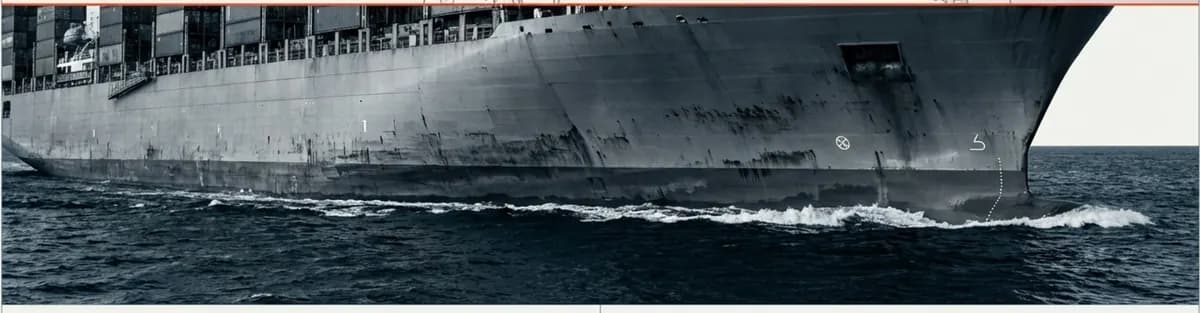
Sea freight is the cheapest way to move larger orders from China to the UK. Containers leave Yantian and Shekou in Shenzhen, Ningbo and Shanghai and arrive at Felixstowe, the UK's busiest container port, or at London Gateway and Southampton. From there, cargo is cleared through UK customs, unloaded at a bonded warehouse and delivered by truck or as parcels.
On a direct Suez Canal routing the ocean voyage takes roughly 28 to 35 days. Door to door, from factory pickup to delivery in the UK, plan for 40 to 45 days. That includes trucking to the Chinese port, export customs, the voyage, UK clearance and final delivery.
Red Sea and Suez Canal: what it means for your timeline
Since 2024 many Asia–Europe sailings went around Africa instead of through the Suez Canal, adding about 7 to 12 days at sea. From October 2026 the major shipping lines began moving services back to Suez, with a full return expected in early 2027. During the changeover some vessels still use the longer route, and arrivals can bunch up at UK ports, so we confirm the routing of your vessel when we book it.
FCL or LCL: which one should you book?
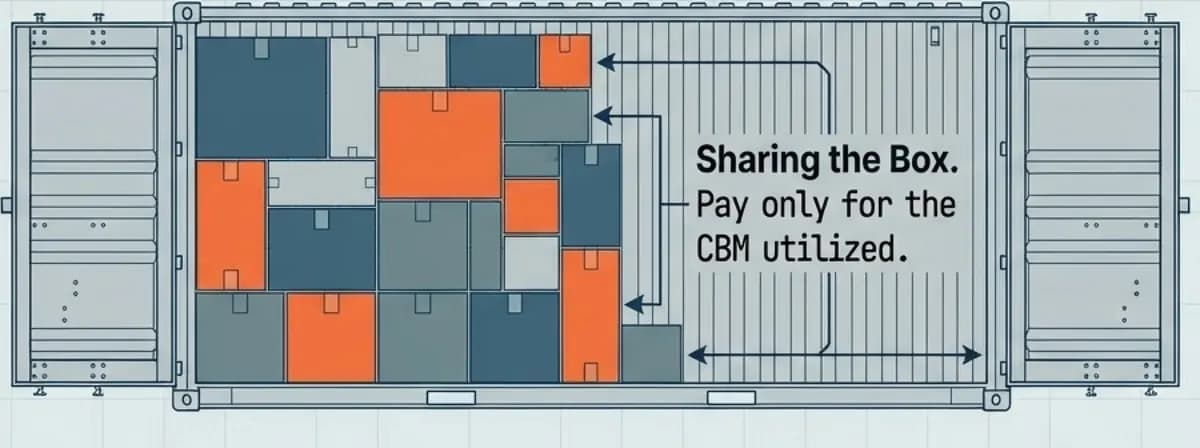
LCL (less than container load) means your cartons share a container with other shippers' goods. You pay per cubic metre (CBM), which makes LCL the right choice for orders of roughly 2 to 15 CBM. It takes a few days longer than FCL because the container is packed at a consolidation warehouse in China and unpacked again in the UK.
FCL (full container load) means you book the whole container. Once your cargo is around 15 CBM or more, a 20ft container usually costs less than LCL, and your goods are sealed in at the factory and not handled again until delivery.
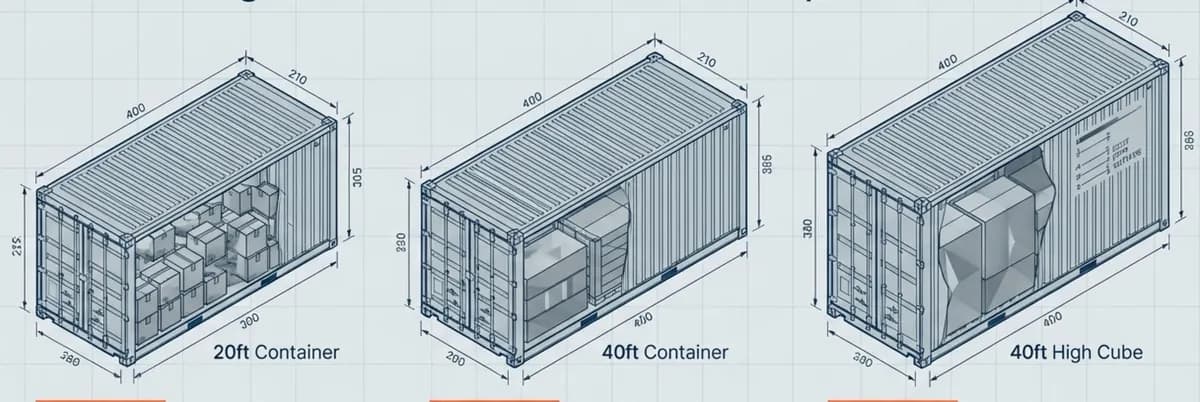
| Container | Internal size (approx.) | Practical load | Typical use |
|---|---|---|---|
| 20ft (20GP) | 5.9 × 2.35 × 2.39 m, about 33 CBM | 25–28 CBM | Heavy goods, first full-container orders |
| 40ft (40GP) | 12.0 × 2.35 × 2.39 m, about 67 CBM | 55–58 CBM | Larger orders of mixed products |
| 40ft High Cube (40HQ) | 12.0 × 2.35 × 2.69 m, about 76 CBM | 65–68 CBM | Light, bulky goods such as furniture and homeware |
Practical load allows for carton shapes and safe stacking. Our container loading calculator shows how your cartons fit.
Air freight from China to the UK
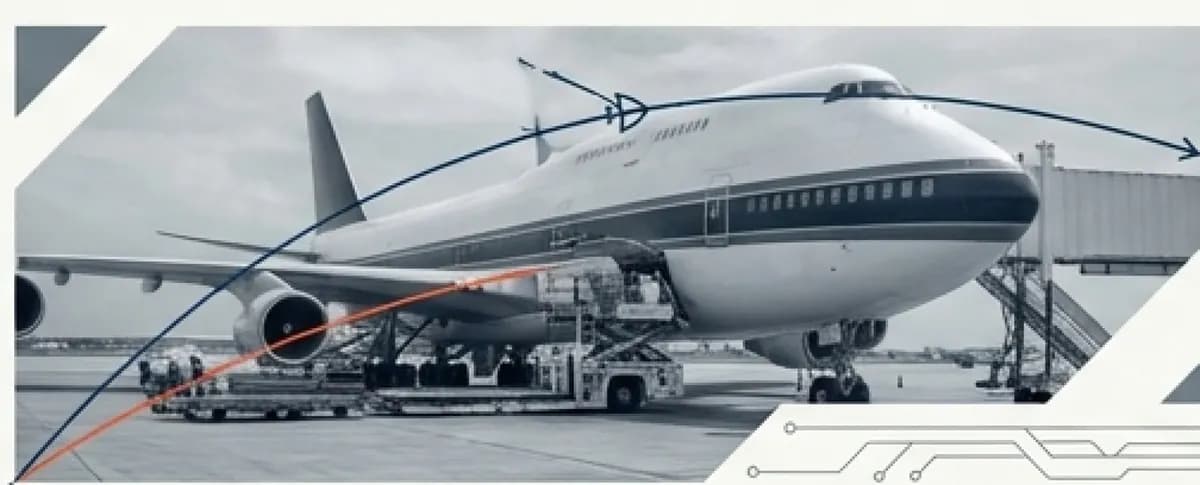
Air freight is the fastest way to ship from China to the UK for anything bigger than a courier parcel. Our priority service flies from Guangzhou (CAN) and Shenzhen (SZX) to London Heathrow (LHR), with door-to-door delivery in about 5 to 7 days. Our economy routing via Nanchang (KHN) costs less and takes about 7 to 10 days.
Products containing lithium batteries cannot travel on every flight. We send them on a certified battery channel via Hong Kong (about 6 to 8 days) or the Weihai–Korea sea-air route (about 8 to 10 days), once the factory has supplied a UN38.3 test summary and a safety data sheet (MSDS).
How air freight is charged: chargeable weight
Airlines charge for space as well as weight. Each shipment is billed on its chargeable weight, which is the higher of the actual weight and the volumetric weight. Volumetric weight is length × width × height in centimetres divided by 6,000.
Example: 10 cartons of 60 × 50 × 40 cm weighing 18 kg each. One carton has a volumetric weight of 60 × 50 × 40 ÷ 6,000 = 20 kg, which is more than its real 18 kg. The shipment is therefore charged at 10 × 20 = 200 kg, not 180 kg. Packing products more tightly, or in smaller cartons, directly lowers your air freight bill.
When is air worth paying for?
Air makes sense when being out of stock costs more than the extra freight, for example on a best-selling Amazon listing, or when goods are small and valuable. For heavy or bulky orders that can wait six weeks, sea freight is usually several times cheaper per unit.
Rail freight and express courier
China–Europe rail runs block trains from Yiwu, Chengdu and Chongqing across Central Asia to Duisburg in Germany. From there, cargo continues to the UK by truck through the Channel Tunnel or by ferry. Door to door, rail to the UK takes about 45 to 50 days. It sits between sea and air on price and is a useful alternative when ocean space is tight before Christmas or Chinese New Year. Lithium batteries are not accepted on our rail service.
Express courier (DHL, FedEx, UPS) delivers in about 3 to 5 business days and is the simplest option for product samples and small urgent parcels. For anything above roughly 50 kg, air freight is usually cheaper.
How much does shipping from China to the UK cost?
There is no single price per kilo or per container, because freight rates move every week. What you pay depends on five things:
- Transport mode. Sea is cheapest per unit, express is the most expensive.
- Weight and volume. Air is priced per chargeable kilogram, LCL per cubic metre, FCL per container.
- Season. Rates rise before Chinese New Year and in the autumn peak before Black Friday and Christmas.
- Pickup and delivery points. A factory in Yiwu or Chengdu costs more to collect from than one next to Shenzhen port.
- Your products. UK duty rates depend on the commodity code, and batteries or liquids need special handling.
Market reference for a 40ft container
The Freightos Baltic Index for Asia to North Europe stood at about USD 3,442 per 40ft container on 20 October 2026. That is a port-to-port spot price only: it does not include collection in China, export or import customs, UK port charges, duty, VAT or delivery. Ask us for a door-to-door quote to see your full cost.
Five ways to ship from China to the UK more cheaply
- Consolidate orders from several suppliers in our Shenzhen warehouse (up to 7 days free storage) and ship them together.
- Switch from LCL to a 20ft container once you have about 15 CBM. The cost per unit usually drops.
- Book 2 to 3 weeks ahead in peak season to avoid last-minute surcharges.
- Pack cartons tightly. Every empty centimetre is paid for in air freight and LCL.
- Check your commodity code before ordering. The right code avoids overpaying duty or a customs hold.
UK import duty and VAT on goods from China
Goods imported from China into the UK pay two main charges at the border.
Customs duty is set by the UK Global Tariff and depends on the commodity code (HS code) of your product. Many electronics and computers are 0%, while knitted clothing such as cotton T-shirts is 12%. China does not have a trade agreement with the UK, so standard rates apply. You can look up any code on the GOV.UK Trade Tariff service.
Import VAT is 20% for most goods. It is charged on the customs value (the price of the goods plus freight and insurance to the UK) plus the duty.
Worked example: £10,000 of cotton T-shirts by sea
- Goods value (invoice price)
- £10,000.00
- Freight and insurance to the UK
- £1,200.00
- Customs valueGoods + freight + insurance
- £11,200.00
- Customs duty at 12%£11,200 × 12%
- £1,344.00
- Import VAT at 20%(£11,200 + £1,344) × 20%
- £2,508.80
- Duty and VAT payable
- £3,852.80
Illustration only. Your duty rate depends on your commodity code; UK delivery costs after the border can also be added to the VAT value.
Can VAT-registered businesses reclaim import VAT?
Yes. If your business is VAT-registered in the UK, you can use postponed VAT accounting: the import VAT is declared and reclaimed on the same VAT Return, so you do not pay it upfront at the border. For this to work, the goods must be imported under your own EORI and VAT number. Tell us when you book, and we will clear the shipment in your name so the VAT appears on your monthly postponed import VAT statement.
The £135 rule and what is changing
Consignments worth £135 or less currently pay no customs duty, and VAT is normally charged by the seller or online marketplace at the point of sale instead of at the border. The government has confirmed it will remove this duty relief, at the latest by October 2028, so low-value parcels will also pay duty. If your business model relies on shipping small parcels direct to UK customers, it is worth planning for this now.
UK customs clearance: documents and rules
Every commercial import into Great Britain is declared to HM Revenue & Customs (HMRC) through the Customs Declaration Service (CDS). Our UK customs broker files the declaration for you; what we need from you is the information that goes into it.
- EORI number starting with GB. Required for any business importing into the UK. It is free to apply for on GOV.UK.
- Commercial invoice showing the seller, buyer, product description, quantities, unit prices and currency.
- Packing list with carton count, weights and dimensions.
- Commodity code (HS code) for every product. This sets the duty rate. Our free China HS code tool helps you find it.
- Product compliance. Toys, electrical goods, machinery and PPE need UKCA or CE marking. CE marking is still accepted in Great Britain for these products.
- Battery documents. UN38.3 test summary and MSDS for anything containing lithium batteries.
The most common reason for customs delays
Vague invoices. A line such as "electronic parts" or "samples" will be queried by HMRC. Describe what each product is, what it is made of and what it is used for, and make sure the values match what you actually paid.
Shipping from China to Amazon UK (FBA)
We deliver directly to Amazon UK fulfilment centres, including LBA4 (Doncaster), BHX4 (Coventry), LTN4 (Dunstable), MAN1 (Manchester), EDI4 (Dunfermline) and BRS1 (Bristol). Small shipments go in by parcel carrier; larger ones on pallets with a delivery appointment booked through Amazon's carrier system.
Amazon refuses stock that does not meet its rules, so we check them at our warehouse in China before the goods leave:
- Cartons no heavier than 23 kg and no side longer than 63.5 cm (heavier cartons need "Team Lift" or "Mech Lift" labels).
- UK pallets 1.20 × 1.00 m, no taller than 1.70 m and no heavier than 680 kg, on heat-treated wood.
- FBA box labels on two sides of every carton and FNSKU labels on every unit.
- One shipment ID per delivery, with box contents matching the shipment plan.
Useful tools for UK importers
- Volumetric weight calculatorWork out the chargeable weight of your cartons for air and courier.
- Container loading calculatorSee how many cartons fit in a 20ft, 40ft or 40HQ container.
- China HS code finderFind the commodity code that sets your UK duty rate.
- Amazon FBA shipping from ChinaHow we prepare and deliver stock to Amazon warehouses.
How door-to-door shipping from China to the UK works
- 1
Send us your shipment details
Product, carton sizes and number, total weight, supplier city and UK delivery address. We reply with an itemised quote, usually within 2 hours.
- 2
Pickup from your suppliers
Our trucks collect from one or several factories. Goods from different suppliers can be combined in our Shenzhen warehouse.
- 3
Warehouse check
We count cartons, check labels and markings, weigh and measure everything and send you photos.
- 4
Chinese export customs
We prepare the export declaration and documents, so the goods can leave China legally.
- 5
Main transport
Your cargo sails, flies or travels by rail to the UK. You receive the bill of lading or air waybill and tracking updates.
- 6
UK customs clearance
Our broker declares the goods to HMRC through CDS. With DDP, duty and VAT are paid for you and included in your price.
- 7
Final delivery
Delivery to your address, 3PL or Amazon fulfilment centre by truck, pallet network or DPD/UPS parcel service.
How to choose a China to UK freight forwarder
Prices can look similar until something goes wrong. Before you book with any forwarder, ask for clear written answers to these questions:
- Are you licensed? Ask for the company name and licence number, and check it. Ours is NVOCC licence GD20240307220907.
- Is the quote door to door? Make sure it says whether UK port charges, customs clearance, duty and VAT are included.
- Do you have your own warehouse in China? It lets the forwarder check your goods before they leave.
- Who is my contact if there is a delay? You want one named person who answers on WhatsApp or email.
- Can you clear under my EORI? Important if you are VAT-registered and want to reclaim import VAT.